
Buying the wrong light tower is an expensive mistake. Too little coverage means you’re compensating with extra units. Poor fuel efficiency means higher running costs for the life of the equipment. A unit not built for Indian site conditions- rough terrain, monsoon exposure, dust- can break down faster than expected. This guide walks through what to check before you commit, whether you’re buying for a construction site, an infrastructure project, a mine, an event, or disaster-relief operations.
Start With Your Site Requirements
Before comparing specs, get clear on three things:
- Site type and terrain: paved sites are easier on equipment than off-road or unpaved construction and mining sites.
- Duration of use: a short-term project might make renting more practical, while ongoing or repeated projects usually justify a purchase.
- Area-to-be lit: a single work zone needs different coverage than a large, multi-acre site.
These three answers narrow down which specs actually matter for your use case.
Lighting Output: What to Check
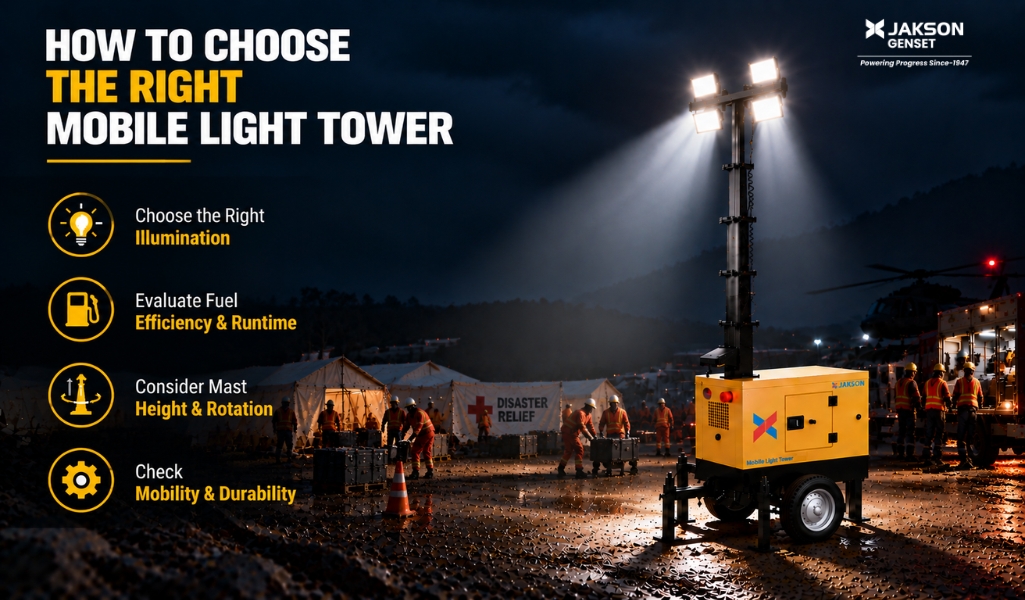
Not all light towers produce the same brightness for the same power draw. Look for:
- Lumens per watt (lm/W) as an efficiency benchmark; high-efficiency LEDs can reach around 158 lm/W, well above older lighting technology.
- Number and wattage of floodlights: a common configuration is 4×300W adjustable floodlights.
- Mast rotation: a 360° rotating mast gives full-site coverage without repositioning the tower.
- Mast height: taller masts generally light a wider area, which matters for large or open sites.
Runtime and Fuel Efficiency
Check the fuel tank capacity and how it translates to hours of operation:
- Look at fuel consumption figures at different load levels (for example, litres per hour at 50% vs 75% load).
- A larger tank combined with efficient LEDs can mean 40-50 hours of runtime on a single fill , a real factor if your site is remote or fuel access is limited.
Longer runtime directly reduces how often someone needs to arrange refuelling, which adds up in labour and logistics costs over a project.
Build Quality and Durability
Indian site conditions, from monsoon rain to dust storms to rough unpaved roads, put real stress on equipment. Check for:
- Chassis and trailer construction rated for rough terrain.
- Mast material: hot-dipped galvanised masts resist corrosion better over time.
- Suspension type: leaf-spring suspension holds up better when towing over uneven ground.
- Stability design: a tower prone to toppling in wind is a safety risk, not just an inconvenience.
Deployment and Mobility
How quickly can the unit be set up and moved?
- Setup mechanism: manual winch systems typically get a tower operational in minutes.
- Towing requirements: check for a proper tow bar and mechanical stay jacks for stability once parked.
- Relocation ease: important if your work zones shift frequently, as they do on highway and long-corridor projects.
Compliance and Noise
Two compliance factors matter for Indian buyers:
- CPCB emission compliance: check that the unit meets current CPCB IV+ norms.
- Sound level rating: a lower dB rating matters for sites near residential areas or under local noise regulations. Ask for the certified sound level, not just a general claim of “silent operation.”
Controller and Monitoring
A good controller (such as a DEIF Controller) should give you clear visibility into fuel level, running hours, and alerts for issues; this makes maintenance planning easier and reduces the chance of unexpected breakdowns.
Cost Considerations
Don’t evaluate the upfront price alone. Factor in:
- Total cost of ownership, fuel consumption and maintenance costs over the equipment’s life, not just the purchase price.
- Expected lifespan: LED components rated for around 50,000 hours offer a long working life before replacement.
- Warranty and after-sales support: a lower upfront price isn’t a good deal if service and spare parts aren’t easily available later.
Questions to Ask the Supplier
Before you buy, ask:
- What’s the service network coverage in your operating region?
- How accessible are spare parts, and what’s the typical turnaround time?
- What does the warranty actually cover, and for how long?
- Can they provide compliance certificates (CPCB, sound level) in writing?
- Are there reference sites where the same equipment is currently in use?
The Bottom Line
The right mobile light tower comes down to matching specs to your actual site conditions, verifying compliance certificates rather than taking claims at face value, and looking at total cost of ownership instead of just the sticker price. A little diligence upfront saves real money and downtime later.
Ready to compare options for your site?
Get a personalised quote from JAKSON and talk to the team about the right fit for your project.