
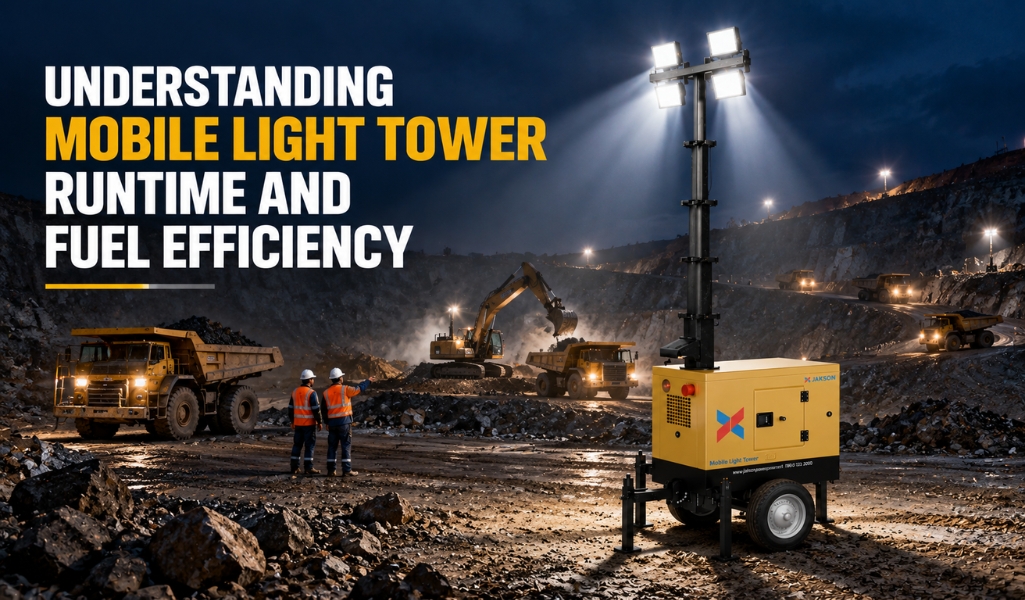
If you’ve ever had to send a fuel truck out to a remote site at 2 AM because a light tower ran dry mid-shift, you already know why runtime matters. For site managers running night operations, every extra hour a light tower can run on a single tank means fewer interruptions, fewer labour hours spent on refuelling, and one less thing to worry about when the site is 40 kilometres from the nearest fuel station.
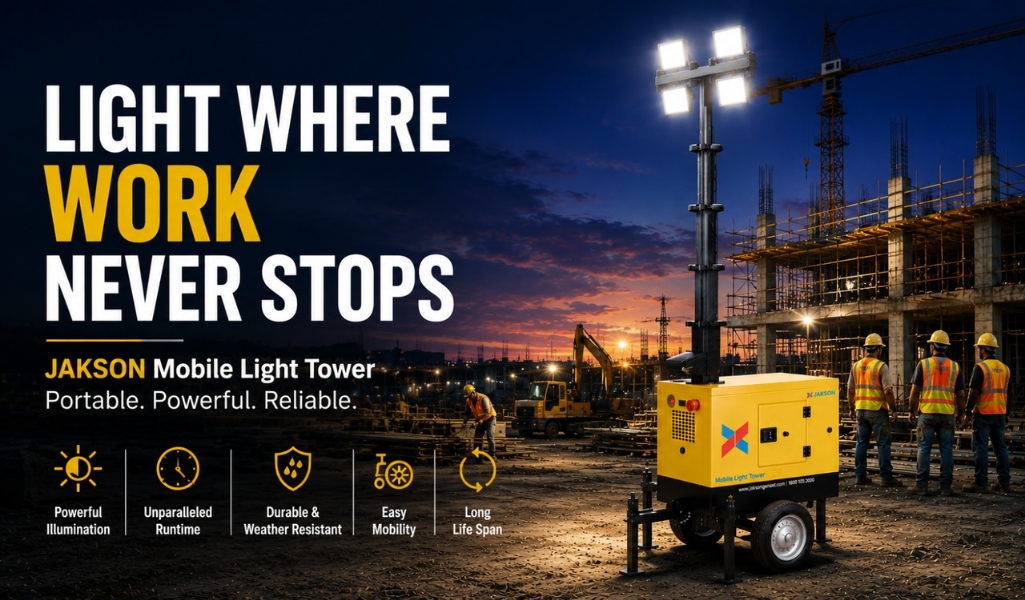
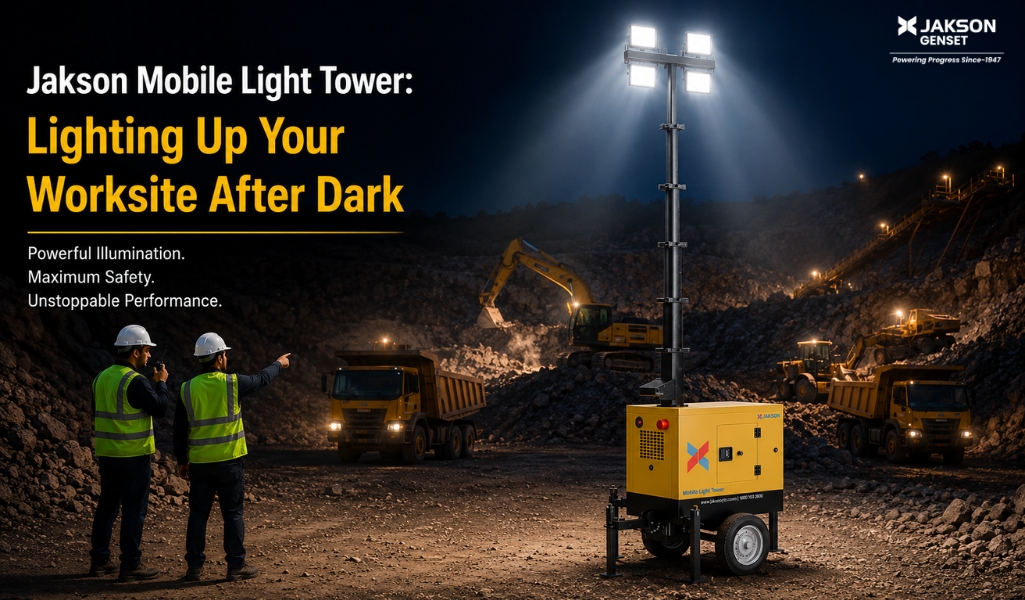
The JAKSON Mobile Light Tower is built to run 40-50 hours on a full tank. Here’s what makes that possible, and what it means for your project.
What Determines a Light Tower’s Runtime
Three things decide how long a light tower runs before it needs fuel:
Tank capacity:
The JAKSON unit carries a 76-litre tank.
Load percentage:
How many floodlights are running and at what brightness, which directly changes how much fuel the engine burns per hour.
Engine size:
The JAKSON unit runs on a 5 kVA engine, which is the basis for the fuel consumption figures below.
Get these three right, and you get a tower that runs through a full week of night shifts without a refuel.
Fuel Consumption Breakdown
Fuel burn changes depending on how hard the unit is working:
| Load | Fuel Consumption |
| 75% load | 1.15 litres/hour |
| 50% load | 0.9 litres/hour |
These figures come from JAKSON-published technical specifications for the Mobile Light Tower, alongside a 76-litre fuel tank and a stated runtime of 40-50 hours at full load. The takeaway either way: a full tank comfortably covers a work week of night lighting.
Why LED Lighting Changes the Fuel Equation
A big part of this efficiency comes down to the lights themselves, not just the engine. The JAKSON Mobile Light Tower uses high-efficiency IP66-rated LEDs rated at 158 lumens per watt. That’s a meaningful jump over older metal halide floodlights, which need far more power to produce the same brightness.
Less power draw for the same light output means the generator works less to keep the site lit, and that directly stretches how long the tank lasts.
What 40-50 Hours Actually Means On Site
Break it down by shift length and the picture gets practical fast:
10-12 hour night shifts:
Roughly 4-5 nights of continuous lighting before refuelling.
Remote sites:
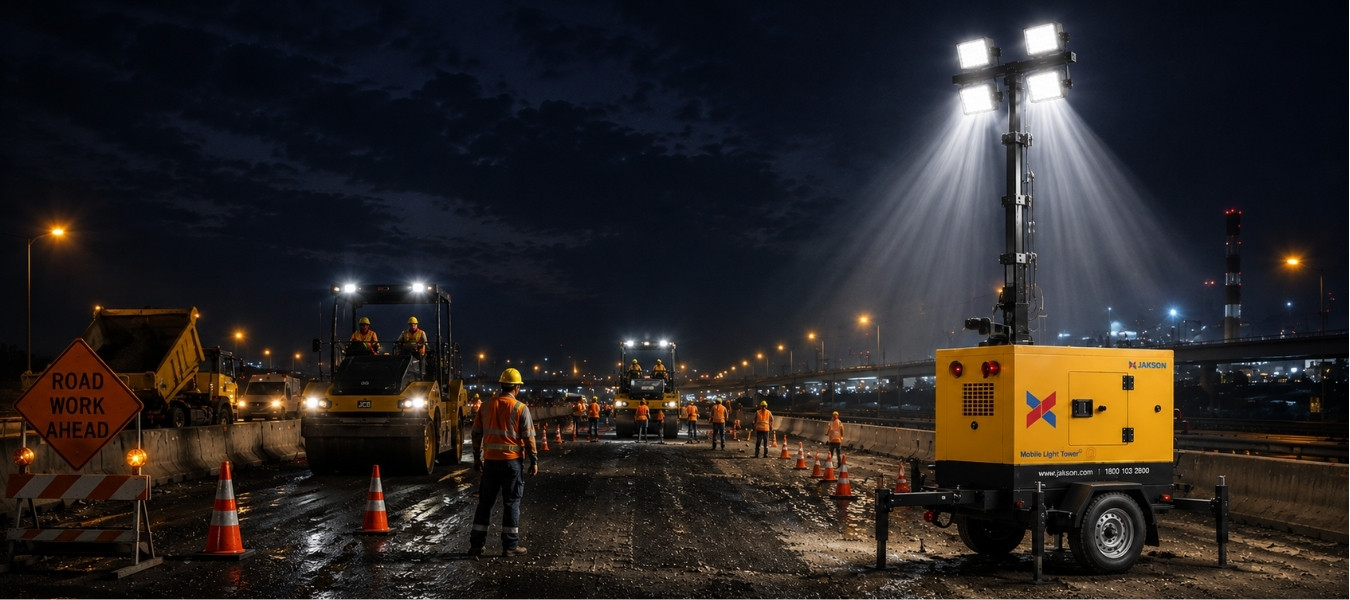
(mining, highway projects, disaster relief zones) Fewer fuel deliveries needed, which matters when fuel access is limited or costly to arrange.
Fuel logistics savings:
Fewer refuelling trips over the life of a project add up in labour hours and vehicle costs, especially on projects running for months.
Tips to Maximise Mobile Light Tower Runtime
A few habits stretch the tank further:
Run at 50% load where lighting needs allow
Not every site needs all four floodlights at full brightness all night.
Keep up with maintenance;
Clean filters and well-maintained injectors keep the engine burning fuel efficiently rather than wastefully.
Adjust mast height and positioning:
A well-positioned tower needs fewer floodlights at full power to cover the same area, cutting fuel demand without cutting visibility.
Comparing Runtime Across Light Tower Types
Solar-hybrid light towers exist and can reduce diesel use on sites with strong daytime sun exposure, but they come with trade-offs in output consistency, especially for continuous heavy-duty use. For sites that need dependable, uninterrupted lighting night after night- such as mining, highway construction, and defence operations- diesel remains the standard, and fuel efficiency at the engine and lighting level is what keeps operating costs down.
The Bottom Line
A 76-litre tank, LED lighting at 158 lm/W, and fuel consumption as low as 0.9 litres/hour at 50% load add up to a light tower that can run through a full work week without a refuel. For site managers, that means less time managing fuel logistics and more time keeping the project moving.
Technical Specifications of Genset
Ready to see it on your site? Get a personalised quote for the JAKSON Mobile Light Tower and talk to the team about the right setup for your project.