
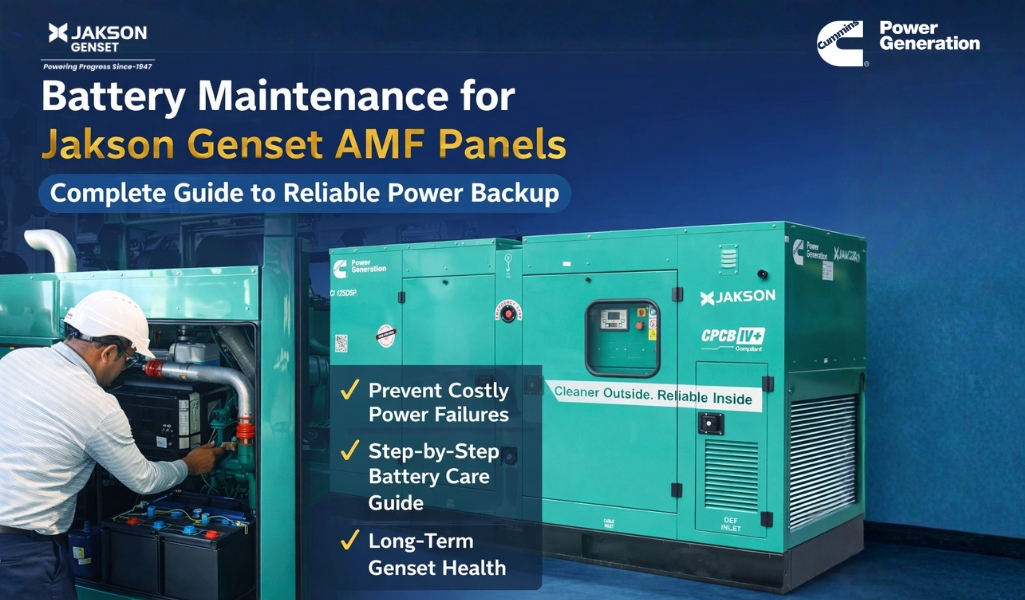
There’s one thing every genset owner learns the hard way: your diesel generators can be in perfect mechanical condition, fully fuelled, and still refuse to start during a power cut. Nine times out of ten, the culprit is the battery. A poorly maintained battery is the single most common reason generators fail at the worst possible moment. And if your JAKSON Genset runs on an AMF (Auto Mains Failure) panel, your battery isn’t just a starting aid; it’s the brain behind the entire automatic operation.
Here’s everything you need to know to keep your AMF panel battery in top shape, year-round.
Why the Battery Is So Critical in an AMF Panel Setup
On a manual genset, a weak battery is an inconvenience. On an AMF panel setup, it’s a complete system failure. The AMF panel monitors your mains supply 24/7 and automatically starts the generator the moment it detects a power failure – without any human intervention. This entire automated response depends on one thing: a fully charged, healthy battery that can deliver instant starting power on demand.
The AMF panel itself houses a built-in battery charger that keeps the battery topped up using a 230V AC mains supply. But the moment it detects a power failure/unhealthy voltage (low or high) – which is exactly when you need your genset to start – that charger stops working. Whatever charge was stored in the battery is all you’ve got. This is why proactive battery maintenance isn’t optional. It’s essential.
How Often Should You Check the Battery?
Most genset operators make the mistake of checking the battery only when something goes wrong. By then, it’s too late. Here’s the maintenance schedule JAKSON recommends for AMF panel batteries:
- Weekly – Check electrolyte levels and inspect for any visible leakage or casing cracks
- Monthly – Test voltage, clean terminals, check specific gravity of electrolyte, and verify the charging system is functioning
- Bi-monthly – Full battery condition test, including load testing and cell voltage checks
- Every 24–36 months – Replace the battery entirely, regardless of apparent condition, as per manufacturer guidelines
Don’t wait for the battery to show obvious signs of trouble. By the time performance degrades noticeably, internal damage is already done.
Step-by-Step Battery Maintenance Checklist
1. Check the Electrolyte Level
For conventional lead-acid batteries, check the fluid level in each cell weekly. The electrolyte should always cover the plates fully. If the level is low, top up with distilled water only – never tap water, never acid.
2. Test the Specific Gravity
Use a hydrometer to measure specific gravity in each cell. The ideal range is 1.23 to 1.28 kg/ltr. Any cell reading significantly below this range indicates a weak or failing cell that needs attention. Cell-to-cell differences of more than 50 points typically mean the battery needs replacement.
3. Clean the Terminals
Corroded terminals are one of the most common – and most preventable – causes of genset starting failures. If you spot white or greenish deposits on the terminals, clean them with a wire brush dipped in a baking soda and water solution, rinse with clean water, dry thoroughly, and apply a thin coat of petroleum jelly or a corrosion inhibitor to prevent future buildup.
4. Check Terminal Connections
Loose terminal connections generate heat and cause resistance that directly impacts starting performance. Tighten all connections securely. A thermal imaging tool can reveal heat hotspots from poor connections before they become a problem.
5. Inspect for Leaks and Physical Damage
Check the battery casing for cracks, bulging, or any electrolyte spillage. A cracked or leaking battery cannot be repaired and must be replaced immediately.
6. Verify the Battery Charger is Working
The AMF panel’s built-in battery charger should maintain a continuous float charge to compensate for the battery’s natural self-discharge. Check weekly that the charger is receiving a 230V AC supply and functioning correctly. If your genset sits idle for extended periods, this float charge is what keeps the battery ready to go.
What Happens If the Genset Is Not Used for a Long Time?
This is a situation many backup power users face – the generator sits unused for weeks or months during seasons with fewer power cuts. Here’s what JAKSON recommends for long idle periods:
- If the genset will be idle for more than 15–20 days, ensure the battery is connected to the charger at all times
- If idle for 3 months or more, the battery must be recharged before attempting to start the genset
- For extended storage, disconnect the positive terminal to prevent slow drain, and reconnect only at the time of commissioning
- Consider running the genset for 15–20 minutes at least once a week under partial load – this not only charges the battery via the engine’s alternator but also keeps the mechanical components lubricated and ready
Safety Precautions You Should Never Ignore
Working around genset batteries involves real hazards – hydrogen gas, sulphuric acid, and high current. Follow these safety rules every single time:
- Always disconnect the negative terminal first before any maintenance work
- Never charge a battery in a wet area or near open flames, candles, or sparks – batteries emit flammable hydrogen gas during charging
- Wear rubber gloves and eye protection when handling electrolytes
- Never place tools on top of a battery – a short circuit can cause an explosion or fire
- Remove battery terminals before any welding work on the genset
- If you’re working on an AMF panel setup, remember – mains voltage is present in the AMF circuit even when the generator is off. Never touch live wires without isolating the supply first
Signs Your AMF Panel Battery Needs Immediate Replacement
Even with regular maintenance, batteries don’t last forever. Watch out for these warning signs:
- The generator is slow to start or cranks weakly
- Battery voltage drops significantly under load testing
- One or more cells show consistently low specific gravity readings
- Visible bulging, swelling, or cracks in the battery casing
- The battery is more than 2–3 years old and hasn’t been replaced
When in doubt, replace. A new battery costs a fraction of the damage caused by a generator that fails to start during a critical power outage.
Leave It to the Experts – JAKSON Genset AMC
If tracking all of this feels like a lot, JAKSON Genset Annual Maintenance Contract (AMC) takes the responsibility off your plate entirely. JAKSON certified service engineers conduct scheduled inspections covering battery condition, terminal cleaning, charging system verification, electrolyte testing, and full genset health checks – on a planned schedule, before problems develop.
For factories, hospitals, data centres, and commercial facilities where uninterrupted power is non-negotiable, an AMC with JAKSON Genset isn’t just convenient – it’s essential protection for your operations.
Contact JAKSON Genset today to schedule a battery health check or learn more about AMC plans designed to keep your generator ready every single day.