
Why It’s More Important Than You Think
When the power goes out, there is no time for second chances.
Whether it’s a hospital operation theatre, a factory production line, or a data centre server room, your generator must perform instantly and flawlessly. It’s not enough for it to simply “start.” It has to carry the full load without hesitation.
That’s exactly why load bank testing matters.
If you own a JAKSON diesel genset, this test is one of the most important steps in making sure your backup system actually works when you need it most.
So, What Is Load Bank Testing?
Think of load bank testing as a health check-up for your generator.
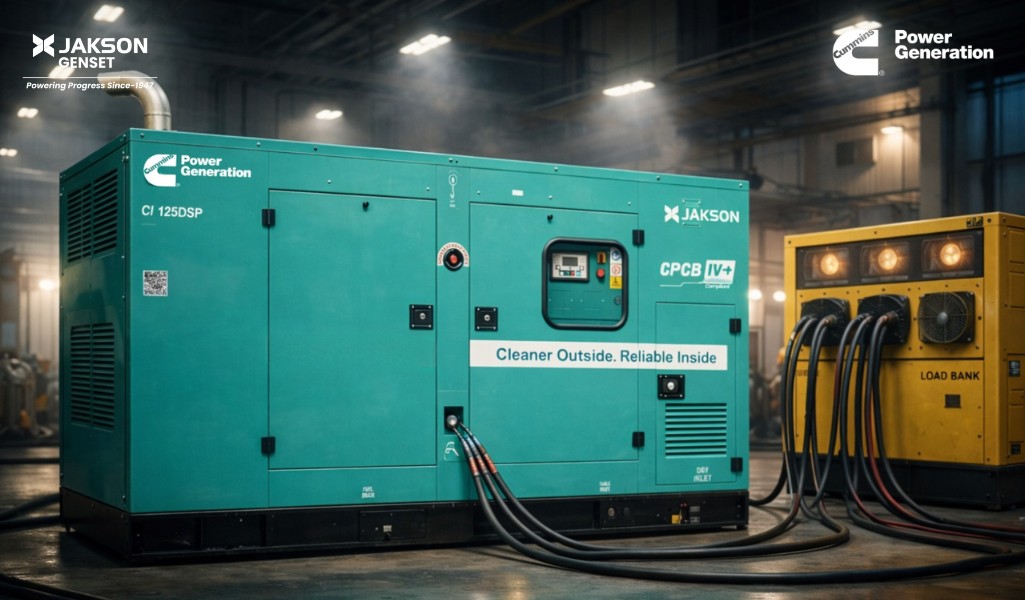
Instead of waiting for a real power outage to see if everything works, a load bank creates an artificial electrical demand. It forces the generator to behave as if it’s powering real equipment.
In simple words, it makes your genset work hard on purpose.
During this test, your JAKSON diesel genset is pushed through different load levels. Technicians carefully observe how it responds. They check:
- Power output
- Voltage stability
- Frequency balance
- Engine temperature
- Cooling system efficiency
- Fuel consumption
- Smoke and vibration levels
This gives you real, measurable proof that your generator can handle pressure because starting without a load proves very little.
Why Generators That “Just Sit There” Need Testing
Many standby generators rarely operate at full capacity. They may run occasionally for a few minutes during routine checks, but that is not enough.
When a generator runs without a proper load for long periods, carbon deposits build up inside the engine. This condition is known as wet stacking. Over time, it can cause:
- Reduced efficiency
- Excess smoke
- Injector problems
- Long-term engine damage
Load Bank Testing helps burn off these deposits by operating the generator at optimal load levels, usually above 50 to 60 percent. It keeps the engine clean and healthy.
Just like a car needs to be driven properly, not just started and parked.
Why Load Bank Testing Is Essential for JAKSON Gensets
Skipping load testing is like hoping your backup parachute works without ever checking it.
Here’s why regular testing is not optional.
1. Real Confidence
A generator that starts but cannot carry a load is not reliable.
Load bank testing gives you hard data. You know exactly how your generator performs under stress. No assumptions. No guesswork.
2. No Panic During Outages
The worst time to discover a problem is during a blackout.
Testing helps identify small issues before they become major failures. Fixing a voltage drop or fuel issue during a scheduled test is far better than repairing it during an emergency.
3. Protection for Critical Facilities
Hospitals, data centres, cold storage units, and manufacturing plants cannot afford downtime.
Even a few minutes without backup power can result in financial loss, safety risks, or operational disruption. Load testing ensures your genset is truly ready.
4. Better Engine Life
Generators perform best when they operate within their ideal load range.
Running continuously at a very low load reduces efficiency and increases wear. Regular load testing improves performance and extends engine life.
5. Compliance and Documentation
Many facilities require documented proof that their backup systems are reliable.
Load bank testing generates performance reports that support audits, safety standards, and regulatory requirements. It protects not just your equipment, but your accountability.
How Load Bank Testing Is Done
The process is structured, safe, and carefully monitored by trained professionals.
Step 1: Pre-Test Inspection
Before applying the load, technicians inspect:
- Fuel and oil levels
- Coolant
- Batteries
- Filters
- Electrical connections
Everything must be in proper condition before the stress test begins.
Step 2: Connecting the Load Bank
The load bank is connected securely to the generator output terminals with proper grounding. Safety protocols are strictly followed.
Step 3: Gradual Load Application
The load is applied step by step, usually at:
- 25 percent
- 50 percent
- 75 percent
- 100 percent
At each stage, readings are recorded and analysed. This gradual increase helps detect weaknesses at different levels.
Step 4: Close Monitoring
While the generator is under load, technicians watch carefully for:
- Voltage fluctuations
- Frequency instability
- Temperature rise
- Smoke levels
- Vibration
- Alarm signals
Even minor irregularities are noted.
Step 5: Cooling Down
After testing, the load is reduced gradually. The generator is allowed to run without a load for cooling before shutdown. Final observations are documented.
How Often Should You Test?
Testing frequency depends on how critical your operations are.
- Hospitals and Data Centres: Every 3 to 6 months
- Factories and Industrial Units: Every 6 to 12 months
- Offices and Commercial Buildings: Once a year
New Installations: Immediately after commissioning
If your generator rarely operates under heavy load, more frequent testing may be required.
Problems Load Testing Often Reveals
Many hidden issues only appear under stress.
Common findings include:
- Voltage drops
- Frequency swings
- Overheating
- Fuel delivery problems
- Excess smoke
- Weak batteries
- Control panel faults
Catching these early prevents unexpected breakdowns and costly emergency repairs.
Best Practices to Follow
If you want your genset to remain reliable for years:
- Use certified and calibrated load bank equipment
- Hire experienced professionals
- Maintain detailed test records
- Integrate testing with preventive maintenance
- Track performance trends over time
Never skip testing just because “everything seems fine”
Reliability comes from discipline, not luck.
Final Thoughts
Your JAKSON Genset stands quietly in the background, ready to take over when the grid fails. It protects your operations, your revenue, and sometimes even lives.
But reliability should never be based on hope.
Load bank testing gives you proof. It confirms that your generator can perform under real demand, not just in theory.
When the lights go out, you should feel confident, not concerned.
Test it. Verify it. Stay prepared.