
Power cuts happen, but your business can’t afford to stop. A diesel genset keeps your system running smoothly, but choosing the wrong one can cost you money and give you headaches.
Why Diesel Gensets Work Best for Indian Businesses?
Diesel fuel is easily available everywhere in India, and one can store it safely on-site. Next, diesel genset are known for their fuel efficiency as they consume less fuel per unit of power generated. Also, they last longer than other generator types with proper maintenance, and serve your business for years. Finally, diesel gensets can easily handle heavy loads. This makes them perfect for industrial uses like powering hospitals, manufacturing plants, shopping malls, and offices.
Step 1: Calculate Your Power Requirements
First, create a comprehensive list of all the equipment that requires power during an outage, such as computers, machines, air conditioners, and lights. Then, check the wattage of each item. You can find this information on equipment labels or in the user manual.
Now, add up the total wattage. This gives you your basic power requirement.
Here comes a bit of a tricky part. Some equipment needs extra power when starting up. Motors and compressors sometimes use 2 to 5 times more power at start-up. Air conditioners need about 3 times their normal running power to start.
Then add 10-20% extra capacity as a safety margin to protect against overloading. It also leaves room for future business growth.
Step 2: Understand Generator Types
Diesel gensets are classified in three main categories, each serving different business needs.
Standby generators work only during emergencies. They kick in when the main power fails. Hospitals and data centres use these for backup power. These units don’t run regularly. They’re designed for occasional use only.
Prime power generators handle recurring use. Construction sites rely on these. They can run for extended periods. If your business is facing regular power cuts, this is a suitable choice.
Continuous power generators run 24/7. Businesses needing round-the-clock power rely on these. They are designed for continuous, non-stop operation.
Next, match your business needs with the right type.
Step 3: Check Size and Portability
Size is a more significant factor than often acknowledged in gensets.
Small portable diesel gensets are perfect for small offices or retail shops. They’re easy to install and move. A medium-sized unit suits restaurants, clinics, and small manufacturing units. Large industrial gensets power factories and large commercial buildings.
If you want to move the generators between multiple locations, portable units make sense. Fixed installations are required for permanent backup power.
Finally, check the weight. Heavy generators need stronger foundations and special installation equipment.
Step 4: Plan for Installation Space
Gensets need open areas for installation. Measure the area where you want to install the generator. They also need room around it for ventilation. Also, plan for fuel storage tanks as diesel needs safe, accessible storage near the generator. The next step is to think about accessible maintenance. Technicians need space to work on the unit.
Choosing between an indoor and an outdoor generator means addressing different requirements. Indoor units need sound mitigation and proper ventilation, whereas outdoor units must be protected from weather and theft.
Finally, one has to ensure proper ventilation. Diesel gensets produce heat during operation. Without sufficient airflow, they overheat and fail.
Step 5: Focus on Fuel Efficiency
Fuel costs add up quickly. An efficient genset saves you money every month.
Modern diesel generators consume less diesel per kilowatt-hour produced and offer better fuel efficiency than older ones. They come with automatic load sensing, which adjusts fuel consumption based on actual power demand.
Compare fuel consumption rates between different models. This data is provided by the manufacturer in litres per hour at various loads. After that, calculate your expected monthly fuel costs. Multiply your running hours by the fuel consumption rate.
Finally, remember this: a slightly more expensive generator with better fuel efficiency often costs less to operate over time.
Step 6: Check Emission Compliance
India has strict emission rules for diesel generators. Your genset must comply.
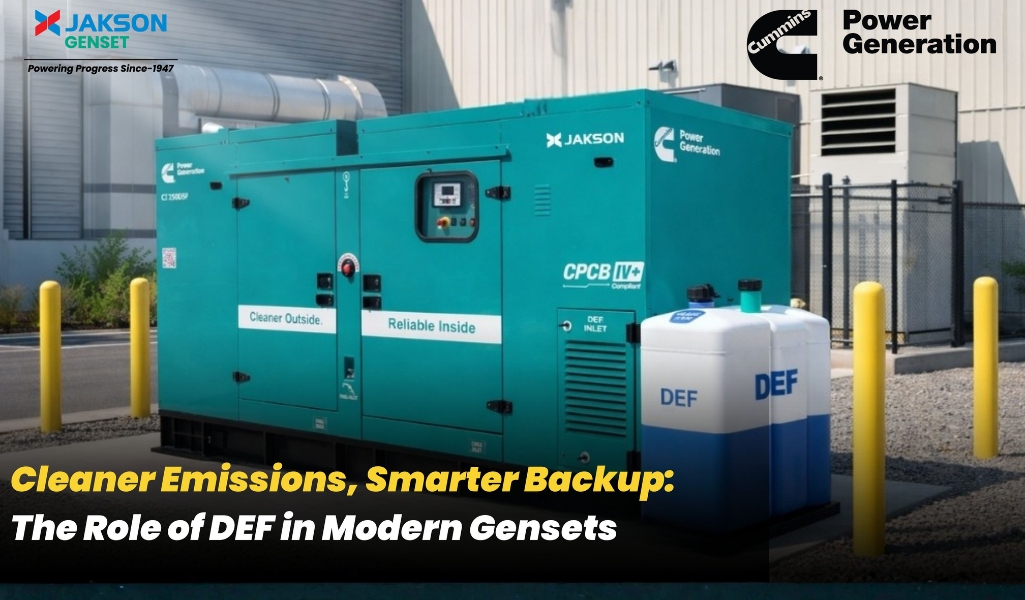
The Central Pollution Control Board (CPCB) sets emission standards for generators. Your diesel genset must meet CPCB IV+ standards. Non-compliant generators face penalties. In some cases, authorities can ban them from operation.
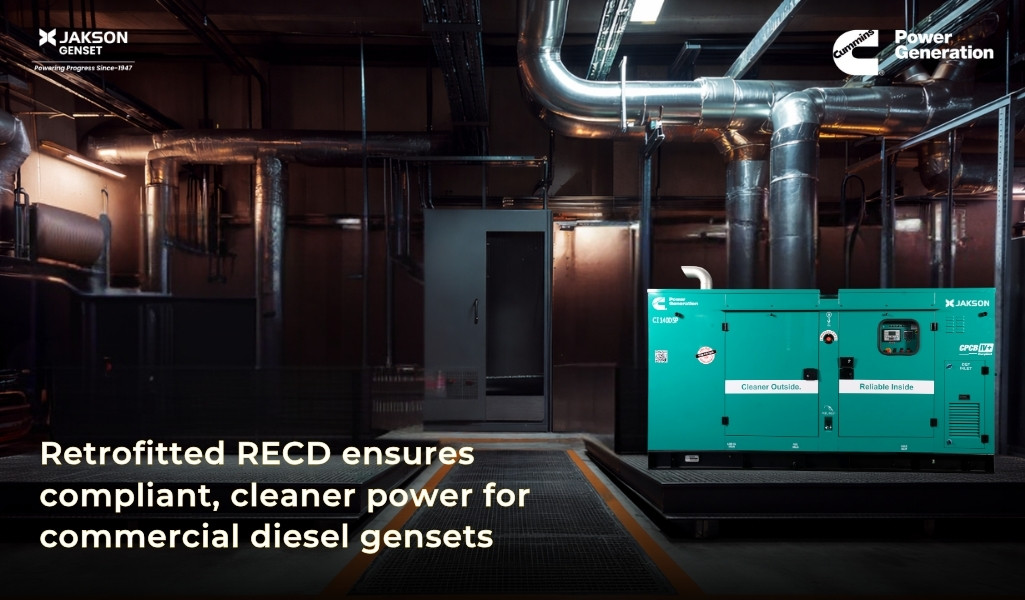
Next, check if your genset needs a Retrofit Emission Control Device (RECD). Generators between 61 KW to 800 KW capacity require RECD installation in many states. Then, verify the emission certificate from the manufacturer.
After that, understand your state’s specific regulations. Some states have stricter rules than the central guidelines. Finally, keep emission test records. Regular testing proves your compliance.
Step 7: Consider Noise Levels
Diesel generators produce noise and can be a problem in certain locations.
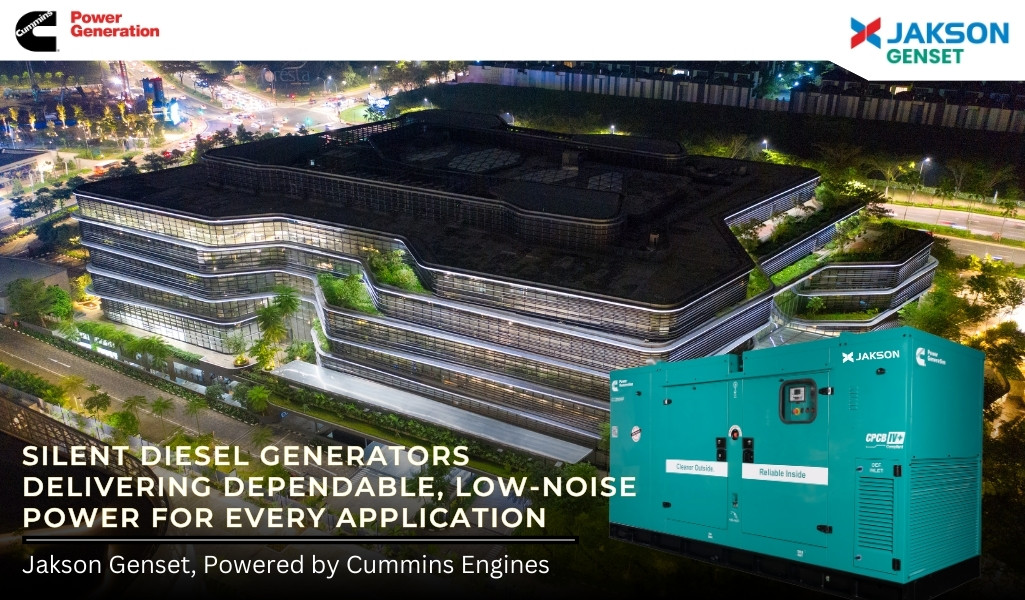
If your business operates near homes, you need a quiet generator as residential areas have strict noise limits. Hospitals and offices also require low-noise units as excessive noise disturbs patients and employees.
Decibel rating is also mentioned in the technical specifications of the generator. You can consider acoustic enclosures to reduce noise significantly. They cost a tad extra but provide peace and mind.
Finally, plan the installation location carefully. Placing the genset away from work areas reduces noise impact.
Step 8: Evaluate Fuel Storage Options
Diesel is highly flammable, and storage requires planning and safety measures.
Begin by calculating how much fuel you need to store. This depends on your expected power outage duration. A simple rule: store enough diesel for at least 8-12 hours of operation. Choose appropriate storage tanks that adhere to fire safety regulations.
Plan for fuel refilling access. As diesel can degrade over time, add fuel stabilisers for extended storage. Implement fire safety measures near fuel storage and keep the area clean and well-ventilated.
Step 9: Select a Reputable Brand
Reputable manufacturers provide better reliability, better after-sales support, and readily available spare parts. Comprehensive warranties protect your investment.
Step 10: Plan for Maintenance
Diesel generators need routine servicing, which includes oil changes, filter replacements, and inspections. Maintenance isn’t optional; it’s essential and should be budgeted.
Then, understand the maintenance schedule. Most manufacturers recommend service every 250-500 running hours. Document every service, repair, and part replacement. This helps track performance and identify recurring issues. Finally, train your staff on basic checks. Daily visual inspections catch small problems before they become big ones.
Step 11: Calculate Total Cost of Ownership
The initial purchase price is just the beginning. Consider installation costs, which include foundation work, electrical connections, and commissioning. Then, account for annual fuel costs. Multiply your expected running hours by fuel consumption and diesel prices.
Also, account for maintenance expenses. Budget for regular servicing, oil changes, and filter replacements. After that, consider repair costs. Even well-maintained gensets need occasional repairs.
Finally, add up everything for 5-10 years. The total cost of ownership helps you make smarter decisions. Sometimes, a slightly more expensive genset with better efficiency costs less over time.
Step 12: Think About Future Growth
Your business will grow. Your genset should grow with it.
Expansion plan when choosing capacity. An undersized genset limits your growth. Next, consider adding equipment in the next few years. New machines, computers, or production lines all need power.
Then, choose a genset with 10-20% extra capacity. This prevents expensive upgrades later. After that, check if you can add modules. Some systems allow capacity expansion without replacing the entire unit.
Finally, think long-term. A genset is a 10-15-year investment. Choose wisely today to avoid regrets tomorrow.
Common Mistakes to Avoid
Many businesses make these mistakes when buying diesel gensets.
Ignoring load calculations: Guessing your power needs leads to wrong sizing. Always calculate accurately. Overlooking installation space: Buying a genset that doesn’t fit your available space creates problems. Choosing based on price alone: The cheapest option often costs more in fuel and repairs. Skipping emission compliance: Non-compliant gensets face legal issues and penalties.
Then, some businesses forget maintenance budgets. A genset without regular service fails when you need it most. Finally, don’t ignore noise regulations. Excessive noise brings complaints and legal troubles.
Making Your Final Decision
Now you have all the information you need.
Start by reviewing your power calculations. Make sure they’re accurate and include future growth. Then, match your requirements with the right genset type and capacity. Next, check emission compliance and noise levels for your location.
After that, compare at least three different brands and models. Look at features, warranties, and service support. Then, get detailed quotes including installation, training, and commissioning.
Finally, don’t rush this decision. A diesel genset is a major investment. Take time to choose carefully. Talk to other business owners in your industry. Learn from their experiences. Visit showrooms to see different models in action.
The right diesel genset protects your business from power disruptions. It keeps operations running smoothly. Customers stay satisfied. Revenue continues flowing. Make an informed choice today. Your business depends on reliable backup power tomorrow.